Complimentary Legacy Calibration & Insured Global Shipping on All Masterpiece Orders




Lightning-Struck Pendant

✦ The Daozang Archives · Artisanal Mastery ✦
From Organic Hardwoods to Aligned Vessel
The Craftsmanship, Precious Inlay, and Three-Day Calibration of the Wushi Vessel
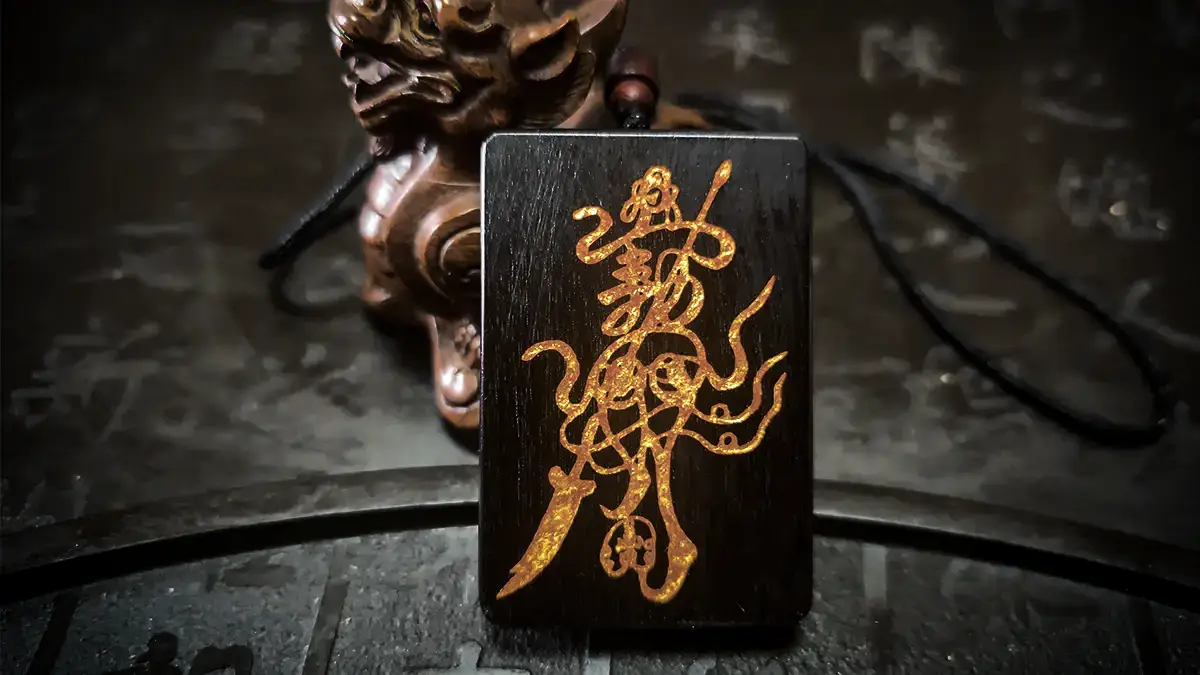
Fig. 1 — The Wushi Vessel: Hand-carved aged timber with mineral cinnabar and pure gold powder inlay.
“A hand-carved Equanimity Pendant made from organic hardwoods passes through an exacting ritual: material selection, hand shaping, talismanic carving, precision mineral inlay, and three-day solar calibration. Only then is its creation completed.”
An Equanimity Pendant, traditionally celebrated in Eastern heritage as the Wushi Vessel (literally "a tablet unburdened by strife"), symbolizes the cultivation of profound internal peace, spatial shielding, and spiritual equilibrium. When sculpted from ancient organic timber, it carries an unbroken continuum of artisanal depth. Yet such a creation never begins as a finished object; the journey from raw botanical timber to calibrated companion is slow, exacting, and reverent.
✦ I. Selecting the Organic Hardwood Matrix
The initial hurdle lies in the strict selection of the wood. At ManoVotTao LLC, our masters curate three classic organic timbers, each chosen for its distinct energetic frequency:
- Lightning-Struck Jujube Wood (Lei Ji Mu): The supreme medium of Daoist spatial calibration, marrying high botanical density with the raw, transformative Yang properties of celestial lightning.
- Aged Monastic Sandalwood (Lao Shan Tan): Venerated for its eternal botanical aroma, sandalwood stabilizes mental turbulence, deepens somatic stillness, and anchors meditative focus.
- Ancient Mountain Peachwood (Tao Mu): Revered in classical folklore as the quintessential protective timber, peachwood grounds environmental static and guards domestic thresholds.
Once harvested, the raw timber is cured naturally in a temperature-controlled studio for months. This slow seasoning eliminates internal moisture tension, preventing micro-warping or fissures when carved.
✦ II. Hand-Carving & Mineral Metallic Inlay
The artisan hand-sculpts the raw blank, softening edges into the restrained, minimalist geometry emblematic of an authentic Wushi Vessel. The surface is carved slowly with micro-chisels, preserving the living grain while executing sacred cloud scrolls or talismanic sigils.
The Art of Sacred Inlay: On master-tier editions, the carved grooves undergo an intricate mineral inlay process. Artisans meticulously embed pure ceremonial cinnabar, natural gold powder, or fine silver wire into the micro-channels. This demanding technique requires microscope-level precision to ensure the mineral lines sit flush with the timber's polished surface.
✦ III. Multi-Stage Polishing & Three-Day Consecration
The vessel is polished through progressive grits of silk sandpaper, erasing tool marks while releasing the wood’s natural luster and botanical aroma. It is sealed with organic natural plant oils.
Finally, the finished piece enters our monastic sanctuary for its Three-Day Solar Calibration Protocol. Bound to its keeper’s natal birth chart and polarity, the vessel absorbs solar attunement over three dedicated dawn-to-dusk solar cycles, transforming into a permanent anchor of equanimity and protection.
✦ Consecrated Masterwork Acquisition ✦
The Hand-Carved Wushi Pendant
Sculpted from aged lightning-struck jujube wood, inlaid with pure gold powder and cinnabar, and consecrated specifically to your personal natal birth chart.
Acquire Your Equanimity Vessel →