Complimentary Legacy Calibration & Insured Global Shipping on All Masterpiece Orders




Mountain Spirit Coin

✦ The Daozang Archives · Symbolic Heritage ✦
Mountain Spirit Token
The Shan Gui Hua Qian in Chinese Symbolic Heritage
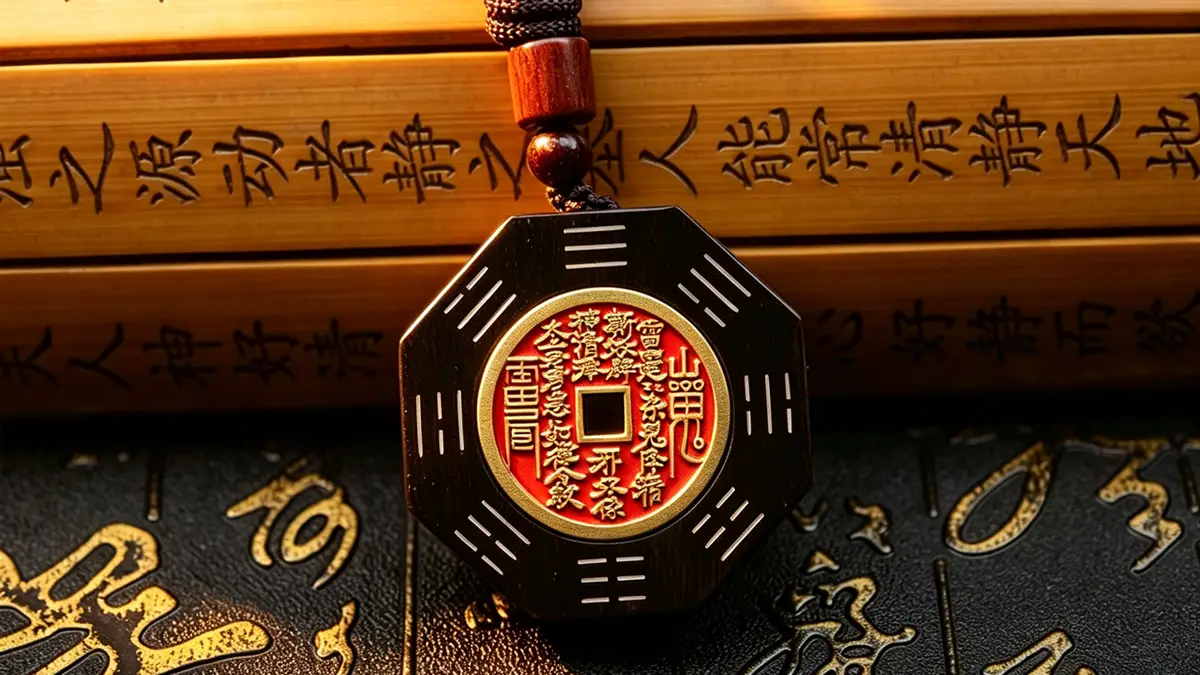
Fig. 1 — Consecrated Thunder-Forged Jujube Wood Shan Gui Token with Bagua Alignment.
“A celebrated Chinese heritage token, the Mountain Spirit Token was traditionally held for mindfulness, focus, and spatial harmony. Combining historical folklore, Daoist symbolism, and traditional imagery, it remains one of the most distinctive vessels of ancient metaphysical culture.”
In traditional Chinese culture, symbolic tokens (hua qian) were not minted for trade, but for personal grounding and focus. Like classical currency, they were shaped in a round form with a square center, symbolizing the harmonious union of heaven and earth. Instead of monetary currency, they carried profound symbolic and cosmological meaning.
Among these heritage tokens, the Shan Gui Hua Qian, or Mountain Spirit Token, is one of the most recognized. In classical Eastern thought, "Shan Gui" does not refer to an ordinary spirit, but to a noble mountain guardian or harmonious natural presence. For this reason, the token has long been associated with spatial order, personal focus, and the capacity to ground environmental static.
The Mountain Spirit Token likely emerged during the late Yuan to early Ming dynasties, gaining widespread popularity throughout the Qing era. It was traditionally carried on the person, attached to garments, or placed mindfully within the home. Keepers valued it as a portable companion to ground environmental static during travel, daily contemplation, and domestic stewardship.
✦ The Symbology of the Engraving
Its intricate design is central to its purpose. One side bears the Bagua (Eight Trigrams), a foundational Daoist symbol representing the dynamic balance of nature. The other side typically carries a traditional symbolic inscription representing sacred geometry, often rendered in ancient seal-script characters that symbolize elemental authority and the grounding of disruptive environmental forces. Together, these elements give the hand-carved token its timeless identity as an aligned work of sacred art.
What makes the Mountain Spirit Token truly distinctive is the way it seamlessly unifies heritage craftsmanship, Daoist cosmology, and practical daily mindfulness. It remains compact enough to carry with ease, yet rich in esoteric depth. Whether worn close to the body or arranged mindfully in a living space, it is traditionally understood as an artifact that supports tranquility, focus, and mindful equilibrium.
Today, the Mountain Spirit Token is valued not only as a collectible masterpiece, but also as a profound example of Chinese symbolic heritage. It reflects a time-honored understanding that hand-crafted, symbolic objects can help harmonize the space around us, strengthen personal intention, and align everyday life with the quiet order of the Dao.
✦ Archival Care & Handling Protocol
If worn or curated within your collection, this artisanal wooden artifact should be preserved with dedicated mindfulness:
- Avoid abrasion, severe impact, and unnecessary physical friction.
- Preserve away from water and excessive humidity to protect the organic wood grain.
- Gently polish with a dry, lint-free silk cloth to enhance its natural sacred patina.
- Store separately in its wooden casket away from harsh metals or keys.
- Maintain with personal intention and respect for its twelve-century legacy.
✦ Consecrated Artifact Feature ✦
The Shan Gui Mountain Spirit Token
Hand-carved from centuries-old lightning-struck jujube wood, consecrated through a three-day solar alignment ritual, and calibrated to your personal natal birth chart.
Acquire This Consecrated Vessel →